
When choosing shower tile, the most important decisions go beyond color. Scale, texture, and layout all affect how the space feels once everything is installed. A shower can have beautiful materials and still feel off. That usually comes down to proportion, surface variation, or how different elements are working together. When those pieces are aligned, the space feels more cohesive. Light interacts with the surface the right way, transitions feel intentional, and nothing competes for attention.
Choosing Shower Tile by Size & Scale
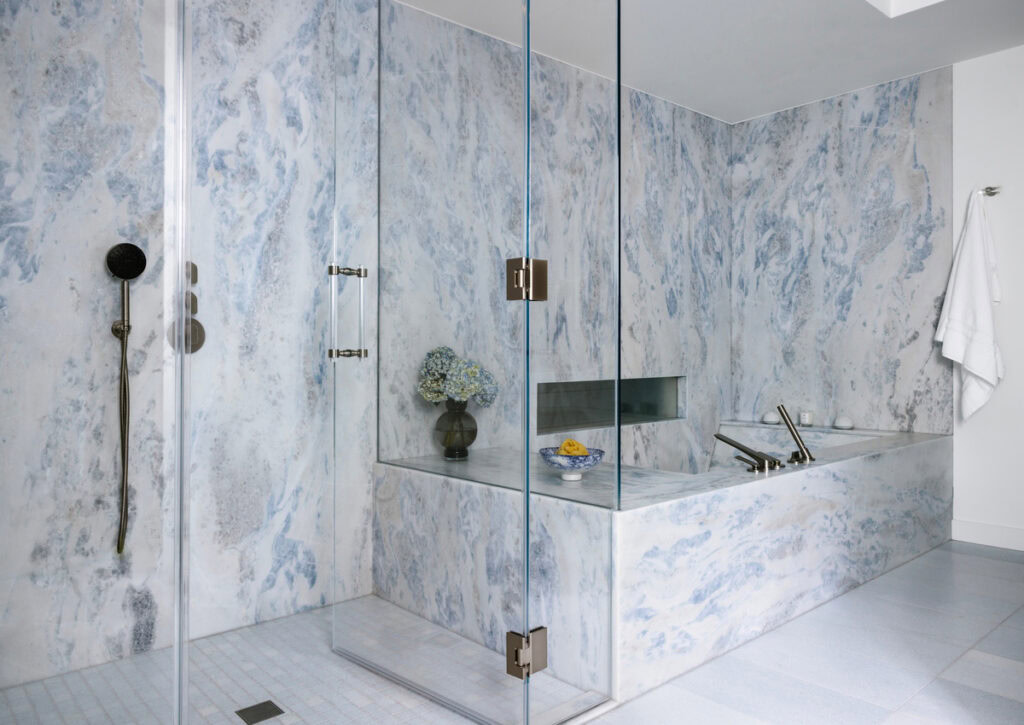
Scale is one of the first decisions that determines how a shower reads. Large-format tile shapes the space by minimizing visual breaks. With fewer grout lines, the surface feels more continuous, which helps the shower feel both open and structured.
That effect becomes more pronounced with slab applications. A material like Artistic Tile Blue Sky Dolomite Slab lets the surface read almost as a single expanse, where the eye moves across the stone instead of stopping at each joint.
That doesn’t mean larger is always better. The tile still needs to relate to the size of the shower. Taller spaces can support larger vertical formats, while smaller enclosures often need more careful layout planning to keep proportions balanced.
Scale also shifts at the floor. Smaller formats like Artistic Tile Penny Lane Mosaic Pink introduce more grout lines, which add traction underfoot. While some showers use smaller tile across the entire space for a more consistent, textured surface, many projects pair larger wall tile with a smaller-format floor for slip resistance.

Choosing Shower Tile by Texture
Texture changes how a surface reacts to light, which is what gives it depth.
With fluted or vertically grooved tile, the ridges create consistent shadow lines, which makes the wall feel more architectural. Installed vertically, it also draws the eye upward, creating height. A single-color vertical tile like Artistic Tile Abbey Road Bianco Dolomiti or Artistic Tile Craftsman Stripe Rosa Perlino works well when you want added dimension without introducing strong contrast or pattern.
Glass tiles like AKDO Beacon Sapphire create a different kind of texture. As light moves across it, the color shifts slightly, which adds movement without changing the layout. This can help brighten showers that don’t get much natural light.
Texture is usually most effective when it’s used selectively. A feature wall or niche can introduce contrast without overwhelming the space. When every surface is textured, the result can start to feel visually heavy.
There are also practical considerations to textured tiles. More texture means more surface variation and more maintenance over time. Balancing textured and smooth surfaces tends to create a cleaner, more manageable space.


Choosing Shower Tile by Color
Color in a shower isn’t just about preference. It changes how the space feels, how light moves, and how different materials relate to each other.
Lighter tones tend to make a shower feel more open, especially in enclosed spaces or rooms without natural light. In installations like Sonoma Tilemakers Stellar Caicos Cornflower Blue, a simple shape in a soft tone can reflect light and reduce visual contrast, even when it repeats. This keeps the space calm and continuous.
Darker tones create more contrast and depth. Used across larger surfaces, deep hues can make a shower feel more grounded and defined, but they also draw more attention to edges, transitions, and layout.
Materials with natural variation, like marble or glass, often sit somewhere in between. Instead of reading as a single color, options like AKDO Pisces Solid Calcatta shift subtly across the surface, softening contrast and adding movement without relying heavily on pattern.


Choosing Shower Tile by Layout & Pattern
Layout is often what creates visual interest, even when the tile itself is simple.
Stacked, offset, grid, and herringbone layouts all change how the surface feels. Some create movement, while others bring more structure and consistency.
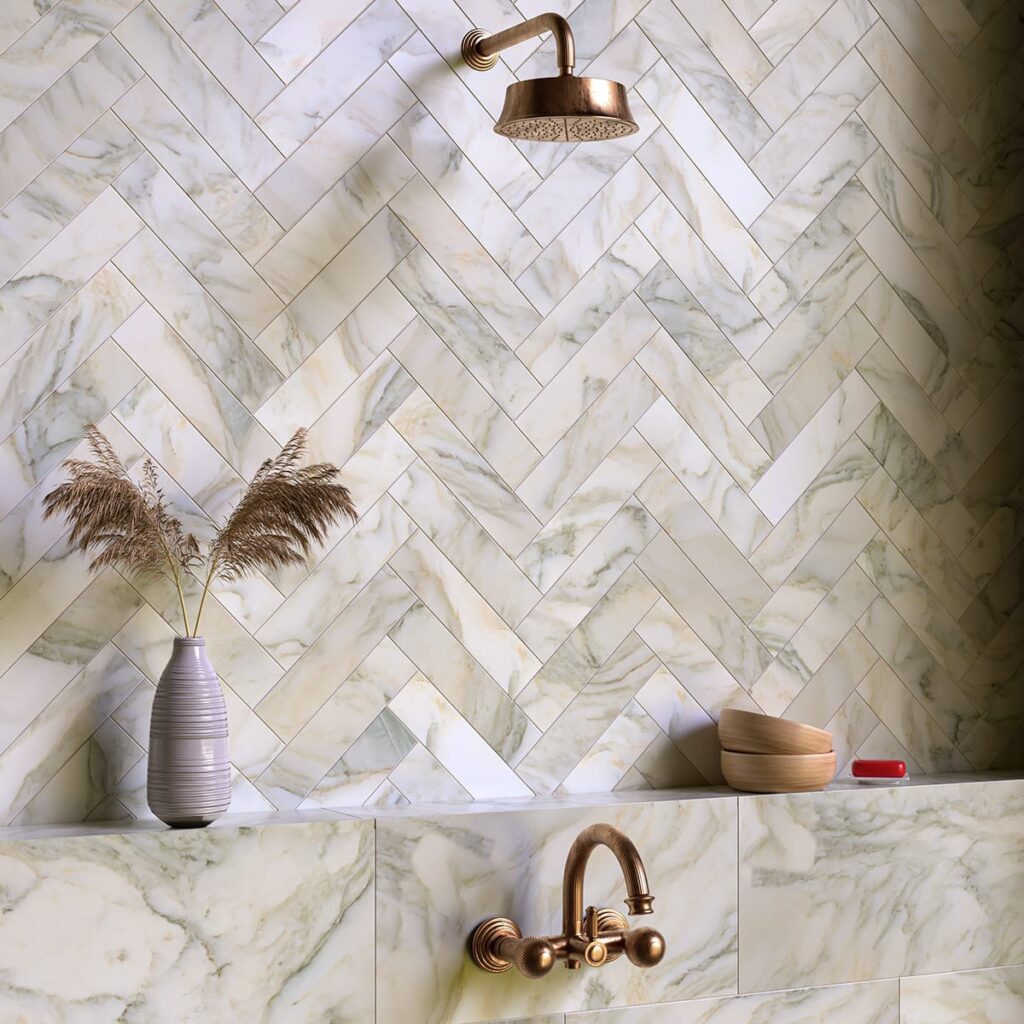
A longer-format marble, like Marble Systems Calcatta Renaissance Honed, works especially well in herringbone layouts. The shape of the tile helps guide the eye, letting light and veining to move across the surface intentionally.
For materials with more natural variation, simpler layouts tend to work better. A straightforward grid keeps the structure consistent while allowing the material itself to stand out. This approach works well with marble, glass, and other tiles where the surface already offers visual interest.
The goal is to let either the layout or the material lead so that the space doesn’t feel overly busy.

Mixing Materials in Tiled Showers
Mixing materials can add depth, but it works best when there’s a clear point of control.
That might be a feature wall, a niche, or a shift in scale between floor and wall tile. Large-format walls paired with smaller mosaic floors are a common example, creating contrast while still maintaining balance.
Combining textures or materials can also help define different areas within the shower. The key is keeping the overall palette and tone consistent so the elements feel connected rather than competing.
When done well, mixing materials doesn’t feel like variety for its own sake. It creates a more tailored, layered look where each element has a purpose.


One example shown here—a marble and gold bathroom by Melanie Roy Design—uses a mix of tile materials while keeping the overall palette consistent.
Questions to Ask Before Choosing Shower Tile
Before making a final selection, it helps to step back and think through how these elements will come together in your space:
- What size tile works best for the scale of my shower?
- Do I want a more uniform surface or something with visible variation?
- How much maintenance am I comfortable with over time?
- Where do I need slip resistance, and how will that affect my choices?
- Do I want the tile to feel subtle or more like a design feature?
- Am I using one material throughout or combining multiple?
- How will lighting affect how the tile looks once installed?
Frequently Asked Questions
What tile size works best for shower walls?
There’s no best option for shower tile sizes. Larger tiles create a cleaner look by reducing grout lines, but they require more precise installation and planning, while smaller tiles are more visually forgiving but tend to need more cleaning.
What finishes are best for shower tile?
Matte and honed finishes are often preferred for a softer look and better slip resistance. Glossy finishes reflect more light but can show water spots more easily.
How do you choose tile for shower floors vs. walls?
Shower floors typically use smaller or more textured tiles for traction, while walls allow for more flexibility in size and finish.
What is the best tile material for showers?
Porcelain is a popular choice because it’s durable and low-maintenance. Natural stone can also be used but usually requires sealing and more upkeep.
What color tile is easiest to maintain in a shower?
Mid-tone tiles and materials with natural variation tend to hide water spots and buildup better than very light or very dark solid colors.
Do I need to seal shower tile?
Porcelain and ceramic usually don’t require sealing. Natural stone and grout lines typically do to prevent moisture absorption and staining.
Design a Luxury Shower Space with Designer Floors of Houston
The way a shower comes together isn’t defined by a single choice. Scale, texture, layout, and material all work together to shape how the space is experienced. Some surfaces feel continuous and quiet, while others introduce contrast or movement. The difference comes down to how those elements are balanced.
At Designer Floors of Houston, we work with designers, builders, and homeowners to source tile that enhances a space’s design and function.
If you’re still working through layout options, visiting the showroom can help put those decisions into context. Seeing scale, finish, and variation in person makes it easier to understand how everything will come together.
Looking for more design insight? Browse our blog, subscribe to our newsletter, or connect with our teamfor guidance on tile selection, layout, and material combinations.
